Summary
The Nagaland Government Hub supports Nagas and their democracy by bringing together information, experts, organizations, policy makers, and the public to facilitate greater engagement in federal, state, and local politics and more civil, positive discussions and collaborations on important issues and governance.
Nagaland Government Hub is one of many state government hubs being launched next year by the nonpartisan, nonprofit onAir Networks. Other state hubs will be discoverable in the future at the national India Government Hub.
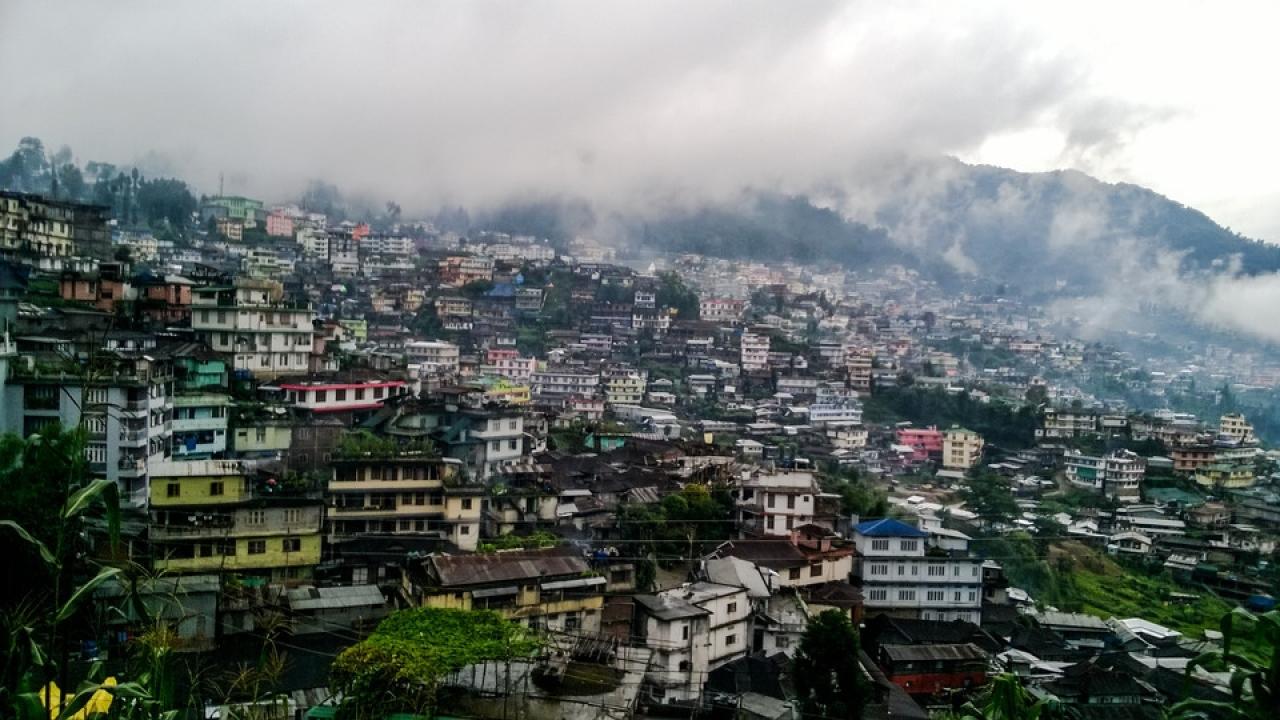
Nagaland is a landlocked state in the north-eastern region of India. It is bordered by the Indian states of Arunachal Pradesh to the north, Assam to the west, Manipur to the south, and the Sagaing Region of Myanmar (Burma) to the east. Its capital city is Kohima and its largest city is the twin Chümoukedima–Dimapur. The state has an area of 16,579 square kilometres (6,401 sq mi) with a population of 1,980,602 as per the 2011 Census of India, making it one of the smallest states of India.
OnAir Post: Nagaland Government Hub
News
India Today NE, – August 2, 2023
United Naga Council (UNC) has directed Naga legislators to abstain from the dictate of some Civil Society Organisations (CSOs) who are dictating government for convening a Special Assembly Session on or before August 5.
In an official statement dated August 1, the UNC said that it is constrained to issue this communique’ in regard to various unwarranted developments spiraling with the ongoing conflict of Chin-Kuki-Zo and Meiteis in the state of Manipur. For, UNC would like to make our stance loud and clear once and for all to ensure that the perilous situation is not aggravated beyond control.
”Various Civil organizations in the valley dictating the government for convening Special Assembly Session on or before 5th August 2023 to protect the Territorial Integrity of Manipur state and imposing to all MLAs including the Naga legislators to stand in their interest is highly uncalled for and nonsensical at this fluid situations.
It is high time, communities living in the state realize and respect each different position and historical facts. Naga people will not accept any kind of imposition under any circumstances. Therefore, UNC is necessitated to direct all the Naga legislators to abstain from such Assembly Session convening under the dictate of some CSOs,” it added.
About
Web Links
Wikipedia


.jpeg)


Naga people form the majority of the population. According to the 2011 census there are 2 million people living in Nagaland. The Naga people number around 1.8 million in the state, constituting over 90% of the population. These belong mostly to the Sino-Tibetan language family.[81] Shafer came up with his own classification system for languages found in and around Nagaland.[82]
In 1967, the Nagaland Assembly proclaimed Indian English as the official language of Nagaland and it is the medium for education in Nagaland.[83] Other than English, Nagamese, a creole language based on Assamese, is widely spoken.[84]
The major languages spoken as per the 2011 census are Konyak (244,135), Ao (231,084), Lotha (177,488), Angami (151,883), Chokri (91,010), Sangtam (75,841), Bengali (74,753), Zeme (71,954; covering Zeliang, 60,399 and Zemi, 11,165), Yimkhiungrü (74,156), Chang (65,632), Khiamniungan (61,906), Rengma (61,537), Phom (53,674), Nepali (43,481), Kuzhami (34,218), Pochury (21,446), Kuki (18,391), Chakhesang (17,919), Assamese (17,201), Bodo (12,243; covering Bodo 7,372 and Dimasa 4,871), Manipuri (9,511), Sema (8,268), etc.[85]
Religion
.svg)
According to the 2011 Census, 87.93% of the state population are Christian, making it the most Christian populated state in India. Hindus form the second largest at 8.75%, followed by Muslims (2.47%), Buddhists (0.34%), Jains (0.13%), and Sikhs (0.10%), with 0.12% reporting no religious affiliation.[86]
Christianity

The state’s population is 1.978 million, out of which 88% are Christians.[88][89] Nagaland is known as “the only predominantly Baptist State in the World” and “the most Baptist State in the World.”[90][91][92]
Christianity arrived in Nagaland in the early 19th century. The American Baptist Naga mission grew out of the Assam mission in 1836. Miles Bronson, Nathan Brown and other Christian missionaries working out of Jaipur to bring Christianity to the Indian subcontinent, saw the opportunity for gaining converts since many parts of India’s northeast was principally animist and folk religion-driven. Along with other tribal regions of the northeast, the people of Nagaland converted to Christianity.[27]
Hinduism
Hinduism form around 8% of Nagaland. Hindus are concentrated mainly in the erstwhile Dimapur District (as per the 2011 census of India, comprising the present districts of Dimapur, Niuland, and Chümoukedima)[93] (28.75%) and Kohima District (9.51%).[86] Dimapur Kalibari is a famous temple in Nagaland.[94] A small number of Nagas (5,176) follow Hinduism according to the 2011 census.[95]
Islam
Islam is the third practised religion with approximately 2.5 per cent of the Nagaland population.[96] The highest concentration of Muslims in Dimapur District, while other districts have less than 2%.[97]
Historical accounts indicate that Islamic influence reached parts of the Naga Hills during the seventeenth century through the activities of the Assamese Sufi figure Azan Fakir.[98] According to one account, he delegated an associate named Saleh Saheb to remain in the hills and continue religious work among local communities. The descendants of Saleh Saheb later became known as the Parbatia Dewan (“Chief of the Hill”).[99] Despite these efforts, Islam did not lead to the formation of a distinct indigenous tribal Naga-Muslim community in Nagaland.[99]
Other religions
There are also folk religions practised by some Nagas, specially among the Zeliangrongs (Zemes, Liangmais and Rongmeis) but few among other Naga ethnic groups.[100]
Government
The governor is the constitutional head of state, representative of the President of India. He possesses largely ceremonial responsibilities apart from law and order responsibilities.
Elections
The Democratic Alliance of Nagaland (DAN) is a state level coalition of political parties. It headed the government with the Bharatiya Janata Party (BJP) and Janata Dal (United) (JDU). It was formed in 2003 after the Nagaland Legislative Assembly election, with the Naga People’s Front (NPF), and the BJP.[101] The alliance was in power in Nagaland from 2003 to 2018.[102]
The NDPP–BJP–NPF alliance led UDA government has won the majority in 2018 and 2023 Nagaland Legislative Assembly election.[103][104]
Administrative districts


| District | Seat | Area (km2) | Elevation (m) | Population total | Population rural | Population urban | Date created |
|---|---|---|---|---|---|---|---|
| Chümoukedima District | Chümoukedima | 610 | 171 | 125,400 | 81,884 | 43,516 | 2021 |
| Dimapur District | Dimapur | 70 | 145 | 170,000 | 0 | 170,000 | 1997 |
| Kiphire District | Kiphire | 1,130 | 896 | 74,004 | 57,517 | 16,487 | 2004 |
| Kohima District | Kohima | 1,207 | 1,444 | 267,988 | 146,900 | 121,088 | 1957 |
| Longleng District | Longleng | 885 | 1,100 | 50,484 | 42,871 | 7,613 | 2004 |
| Meluri District | Meluri | 1,011 | n/a | 22,558 | n/a | n/a | 2024 |
| Mokokchung District | Mokokchung | 1,719 | 1,325 | 194,622 | 138,897 | 55,725 | 1957 |
| Mon District | Mon | 1,786 | 655 | 250,260 | 215,816 | 34,444 | 1973 |
| Niuland District | Niuland | n/a | 154 | 11,876 | 11,876 | 0 | 2021 |
| Noklak District | Noklak | 1,152 | 59,300 | 59,300 | 0 | 2017 | |
| Peren District | Peren | 2,300 | 1,445 | 95,219 | 81,429 | 13,790 | 2004 |
| Phek District | Phek | 2,026 | 1,524 | 163,418 | 138,843 | 24,575 | 1973 |
| Shamator District | Shamator | n/a | n/a | 12,726 | n/a | n/a | 2022 |
| Tseminyü District | Tseminyü | 256 | 1,261 | 63,629 | 60,766 | 2863 | 2021 |
| Tuensang District | Tuensang | 2,536 | 1,371 | 137,296 | 100,522 | 36,774 | 1957 |
| Wokha District | Wokha | 1,628 | 1,313 | 166,343 | 131,339 | 35,004 | 1973 |
| Zünheboto District | Zunheboto | 1,255 | 1,852 | 140,757 | 113,160 | 27,597 | 1973 |
Economy
The Gross State Domestic Product (GSDP) of Nagaland was about ₹12,065 crore (US$1.3 billion) in 2011–12.[106] Nagaland’s GSDP grew at 9.9% compounded annually for a decade, thus more than doubling the per capita income.[107]
Nagaland has a literacy rate of 80.1 per cent. The majority of the population in the state speaks English, which is the official language of the state. The state offers technical and medical education.[107] Nevertheless, agriculture and forestry contribute a majority of Nagaland’s Gross Domestic Product. The state is rich in mineral resources such as coal, limestone, iron, nickel, cobalt, chromium, and marble.[108]
.jpg)
Plantation crops such as premium coffee, cardamom, and tea are grown in hilly areas in small quantities with large growth potential. Most people cultivate rice as it is the main staple diet of the people. About 80% of the cropped area is dedicated to rice. Oilseeds is another, higher income crop gaining ground in Nagaland.
The farm productivity for all crops is low, compared to other Indian states, suggesting a significant opportunity for farmer income increase. Currently, the Jhum to Terraced cultivation ratio is 4:3; where Jhum is the local name for cut-and-burn shift farming. Jhum farming is ancient, causes a lot of pollution and soil damage, yet accounts for the majority of the farmed area. The state does not produce enough food and depends on the trade of food from other states of India.[61]
Tourism has a lot of potentials but was largely limited due to insurgency and concern of terrorist violence over the last five decades. More recently, a number of Small Medium Enterprises and private sector companies have actively promoted Nagaland tourism, helping initiate a growing tourism market. Tourism experts contend that the state’s uniqueness and strategic location in northeast India give Nagaland an advantage in tapping into the tourism sector for economic growth.[109]
The state generates 87.98 MU compared to a demand for 242.88 MU. This deficit requires Nagaland to buy power. The state has significant hydroelectric potential, which if realised could make the state a power surplus state. In terms of power distribution, every village and town, and almost every household has an electricity connection; but, this infrastructure is not effective given the power shortage in the state.[61]
Natural resources
After a gap of almost 20 years, Nagaland state Chief Minister, T. R. Zeliang launched the resumption of oil exploration in Changpang and Tsori areas, under Wokha District in July 2014. The exploration will be carried out by the Metropolitan Oil & Gas Pvt. Ltd. Zeliang has alleged failures and disputed payments made to the statement made by the previous explorer, the state-owned Oil and Natural Gas Corporation (ONGC).[110]
Transportation
Nagaland’s rugged and mountainous landscape presents a major challenge to the infrastructural development of transport. Roads are the backbone of Nagaland’s transportation network. The state has over 15,000 km of surfaced roads, but these are not satisfactorily maintained given the weather damage. Yet, in terms of population served for each kilometre of surfaced road, Nagaland is the second best state in the region after Arunachal Pradesh.[61]
 NH 2 : Dibrugarh–Tuli–Changtongya–Mokokchung–Wokha–Tseminyü–Kohima–Viswema–Imphal
 NH 29 : Dabaka–Dimapur–Chümoukedima–Kohima–Kigwema–Chizami–Jessami
 NH 129 : Dimapur–Numaligarh
 NH 129A : Dimapur–Rüzaphema–Pimla–Jalukie–Peren–Maram
 NH 202 : Mokokchung–Tuensang–Meluri–Jessami–Imphal
 NH 702 : Changtongya–Longleng–Mon–Tizit–Sapekhati
 NH 702B : Longleng–Tuensang
Airways

Dimapur Airport is the sole airport in Nagaland, with scheduled commercial services to Kolkata, Guwahati, Imphal,[111] and Dibrugarh. It is located 7 kilometres (4.3 mi) from Dimapur, and 70 kilometres (43 mi) from Kohima. The airport’s asphalt runway is 2290 metre long, at an elevation of 487 feet.[112]
Culture


Festivals

Nagaland is known in India as the Land of Festivals.[113] The diversity of people and ethnic groups, each with their own culture and heritage, creates a year-long atmosphere of celebrations. In addition, the state celebrates all Christian festivities. Traditional ethnic-related festivals revolve round agriculture, as a vast majority of the population of Nagaland is directly dependent on agriculture. Some of the significant festivals for each major ethnic groups are:[14]
| Ethnic groups | Festival | Celebrated in |
|---|---|---|
| Angami | Sekrenyi | February |
| Ao | Moatsü, Tsüngremong | May, August |
| Chakhesang | Tsükhenyie, Sükhrünyie | April/May, January |
| Chang | Naknyulüm, Kundanglüm | April, July |
| Dimasa Kachari | Bushu Jiba, | January, April |
| Khiamniungan | Miu, Tsoküm | May, October |
| Konyak | Aoleang, Lao-ong Mo | April, September |
| Kuki | Mimkut, Chavang Kut | January, November |
| Lotha | Tokhü Emong | November |
| Phom | Monyiü, Moha, Bongvüm | April, May, October |
| Pochury | Yemshe | October |
| Rengma | Ngada | November |
| Sangtam | Mungmung | September |
| Rongmei | Gaan-ngai | January |
| Sümi | Ahuna, Tülüni | November, July |
| Yimkhiungrü | Metümnyo, Tsungkamniu | August, January |
| Zeliang | Hega, Langsimyi/Chaga Gadi and Mileinyi | February, October, March |
Hornbill Festival
The Hornbill Festival[114] was launched by the Government of Nagaland in December 2000 to encourage inter-ethnic interaction and to promote cultural heritage of the state.
It is held at the Kisama Heritage Village which is about 12 km south of Kohima. All the ethnic groups of Nagaland take part in this festival. The aim of the festival is to revive and protect the rich culture of Nagaland and display its history, culture and traditions.[115]

The festival is named after the hornbill bird, which is displayed in folklores in most of the state’s ethnic groups. The week-long festival unites Nagaland and people enjoy the colourful performances, crafts, sports, food fairs, games, and ceremonies. Traditional arts which include paintings, wood carvings, and sculptures are on display. Festival highlights include traditional Naga Morungs exhibition and sale of arts and crafts, food stalls, herbal medicine stalls, shows and sales, cultural medley – songs and dances, fashion shows, beauty contest, traditional archery, naga wrestling, indigenous games, and musical concerts. Additional attractions include the Konyak fire eating demonstration, pork-fat eating competitions, the Hornbill Literature Festival (including the Hutton Lectures), Hornbill Global Film Fest, Hornbill Ball, Choral Panorama, North East India Drum Ensemble, Naga King Chilli eating competition, Hornbill National Rock Contest,[116] Hornbill International Motor Rally and WW-II Vintage Car Rally.[117][118]
Sports
Kene
Kene or Naga wrestling is a folk wrestling style and traditional sport of the Nagas.[119]
Aki Kiti
Aki Kiti or Sümi kick fighting is a traditional combat sport originating from and was practised by the Sümi Nagas. It is characterised by kicking and blocking solely using the soles of the feet. The sporting event served the purpose of righting wrongs, restoring honour, or “settling scores” between tribes and tribesmen without resorting to violence. It was practised during tribal ceremonies.[120]
Cricket
Football
Cuisine
Historical rituals
Feasts of Merit
In Naga society, individuals were expected to find their place in the social hierarchy, and prestige was the key to maintaining or increasing social status. To achieve these goals a man, whatever his ascendancy, had to be a headhunter or great warrior, have many sexual conquests among women, or complete a series of merit feasts.[121]
The Feasts of Merit reflected the splendor and celebration of Naga life.[12] Only married men could give such Feasts, and his wife took a prominent and honoured place during the ritual which emphasised male-female co-operation and interdependence. His wife brewed the beer which he offered to the guests. The event displayed ceremonies and festivities organised by the sponsor. The Feast given by a wealthier community person would be more extravagant.[122] He would typically invite everyone from the ethnic group. This event bestowed honour to the couple from the community. After the Feast, the tribe would give the couple rights to ornaments equally.[12][123]
Education
Nagaland’s schools are run by the state and central government or by a private organisation. Instruction is mainly in English — the official language of Nagaland. Under the 10+2+3 plan, after passing the Higher Secondary Examination (the grade 12 examination), students may enroll in general or professional degree programs.
Nagaland has three autonomous colleges:
Along with one central university—Nagaland University, one engineering college—National Institute of Technology, one medical college— Nagaland Institute of Medical Science and Research, one College of Veterinary Science and Animal Husbandry in Jalukie[124] and three private Universities—St. Joseph University,[125] Northeast Christian University (NECU)[126] and Institute of Chartered Financial Analysts of India University (ICFAI University).[127]
Tourism

Tourism experts contend that the state’s uniqueness and strategic location in northeast India give Nagaland an advantage in tapping into the tourism sector for economic growth.[109] The state has been extremely successful in promoting the great Hornbill Festival, which attracts Indian and foreign tourists alike.The key thrusts of Nagaland’s tourism are its rich culture, showcasing of history and wildlife.[128] Tourism infrastructure is rapidly improving.[129] Local initiatives and tourism pioneers are now beginning to promote a socially responsible tourism model involving the participation of the councils, village elders, the church and the youth.[130]
Notability
The Naga Mircha is a variety of chilli mainly grown in this state. They are one of the world’s hottest chillies and an indigenous treasure of Nagaland, deeply rooted in the region’s lifestyle since ancient times. For generations, farmers in Nagaland’s chilli-growing areas have cultivated it relying on it as a primary source of income and livelihood. This iconic chilli is an integral part of Nagaland’s culinary identity, inseparably linked to the local community as a staple ingredient.[131]
Geographical indication
It was awarded the Geographical Indication (GI) status tag from the Geographical Indications Registry under the Union Government of India on 2 December 2008 (valid until 21 August 2027).[132][133]
The Secretary, Department of Horticulture & Agriculture, Government of Nagaland, from Kohima, proposed the GI registration of Naga Mircha. After filing the application in August 2007, the chilli was granted the GI tag in 2008 by the Geographical Indication Registry in Chennai, making the name “Naga Mircha” exclusive to the chilies grown in the region. It thus became the first chilli variety from Nagaland and the first type of goods from Nagaland to earn the GI tag.[134][135][136]
See also

.svg)

References
- ↑ “Neiphiu Rio sworn in as Nagaland Chief Minister, becomes 1st Nagaland leader to take oath outside Raj Bhavan”. The New Indian Express. 8 March 2018. Archived from the original on 8 March 2018. Retrieved 8 March 2018.
- ↑ “Primary Census Abstract Data Tables (India & States/UTs – District Level)”. Office of the Registrar General and Census Commissioner of India. Archived from the original on 8 April 2022. Retrieved 8 April 2022.
- ↑ “Nagaland Budget Analysis 2026-27”.
- ↑ “Implied PPP conversion rate”. www.imf.org. Retrieved 6 August 2025.
- ↑ “Implied PPP conversion rate”. www.imf.org. Retrieved 6 August 2025.
- ↑ “India: Subnational HDI”. Global Data Labs. Retrieved 8 June 2025.
- ↑ “Appendix-A: Detailed tables, Table (7): Literacy rate (in per cent) of persons of different age groups for each State/UT (persons, age-group (years): 7 & above, rural+urban (column 6))”. Annual Report, Periodic Labour Force Survey (PLFS) (July 2023 – June 2024) (PDF). National Sample Survey Office, Ministry of Statistics and Programme Implementation, Government of India. 23 September 2024. pp. A-10.
- ↑ Census of India 2011 Archived 7 February 2013 at the Wayback Machine Govt of India
- ↑ “Nagaland Profile | Nagaland State Portal”. nagaland.gov.in. Archived from the original on 30 October 2023. Retrieved 9 October 2023.
- ↑ “Economic Growth in Nagaland: IBEF Infographics”. www.ibef.org. January 2024. Retrieved 25 April 2024.
- ↑ “Nagaland’s petroleum reserves stood at 2.38 million tons in 2021”. India Brand Equity Foundation. Archived from the original on 28 August 2022. Retrieved 28 August 2022.
- 1 2 3 4 5 6 7 Chasie, Charles (2005). “Nagaland in Transition”. India International Centre Quarterly. 32 (2/3): 253–264. ISSN 0376-9771.
- 1 2 3 Charles Chasie, Nagaland Archived 19 February 2014 at the Wayback Machine, Institute of Developing Economies (2008)
- 1 2 3 4 5 6 7 8 9 10 Nagaland – State Human Development Report Archived 21 August 2014 at the Wayback Machine United Nations Development Programme (2005)
- ↑ Grierson. Linguistic Survey of India Vol iii part ii. p. 194.
- ↑ Hodson, TC (1911). The Naga tribes of Manipur. p. 9.
- ↑ Upper Chindwin District vol A. Burma Gazetteer. p. 22.
- ↑ Robert Reid, Michael Grosberg (2005). Myanmar (Burma). Lonely Planet. p. 380.
- ↑ SEMA, HOKISHE (1986). EMERGENCE OF NAGALAND: Socio-Economic and Political Transformation and the Future. INDIA: VIVEK PUBLISHING HOUSE PVT LTD, DELHI. p. 3. ISBN 0-7069-3031-2.
- ↑ Inato Yekheto Shikhu (2007). A re-discovery and re-building of Naga cultural values. Daya Books. p. 4. ISBN 978-81-89233-55-6.
- ↑ India – Unity in Cultural Diversity (PDF). National Council of Educational Research and Training. 2003. p. 103.
- ↑ Vibha Sharma, Shahira Naim (16 October 2018). “Allahabad is now Prayagraj, Yogi’s Cabinet renames historic city”. The Tribune.
- ↑ “The recently discovered Yan-aung-myin pagoda inscription at ‘ ‘Themaunggan, south of Pinya (Obverse, line 8, 762 s.), claims that in 1400 CE the rule of the king extended beyond the Kandu (Kadu) and the Ponlon amri yols (“Palaungs who grow tails”), to the “heretic kingdoms of the Naked Nagas on the borders of Khamti Khun lcyviw (?),”(Luce & Htway 1976:174)
- ↑ Kalita, Jayanta (12 August 2022). “How India’s North East rebelled against the British”. Times of India. Archived from the original on 15 August 2022. Retrieved 16 August 2022.
- ↑ G. B. Reddy (2001). Nation in crisis. Authors Press. p. 284. ISBN 9788172730598. Archived from the original on 8 April 2023. Retrieved 22 March 2023.
- ↑ “Maps of India website – photograph of GH Damant grave headstone”. Archived from the original on 1 November 2014. Retrieved 1 November 2014.
- 1 2 Pruett, Gordon E. (1974). “Christianity, history, and culture in Nagaland”. Contributions to Indian Sociology. 8 (1): 51–65. doi:10.1177/006996677400800104. ISSN 0069-9659.
- ↑ Tezenlo Thong, “‘Thy Kingdom Come’: The Impact of Colonization and Proselytization on Religion among the Nagas,” Journal of Asian and African Studies, no. 45, 6: 595–609
- ↑ Bert Sim, Mosstodloch, Aberdeenshire, Scotland: Pipe Major of the Gordon Highlanders at Kohima: his home is named “Kohima.” – RJWilliams, Slingerlands, NY/USA
- ↑ Dougherty, Martin J. Land Warfare. Thunder Bay Press. p. 159.
- ↑ Dennis, Peter; Lyman, Robert (2010). Kohima 1944: The Battle That Saved India. Osprey. ISBN 9781846039409.
- ↑ Dougherty, Martin J. (2008). Land Warfare. Thunder Bay Press. p. 159. ISBN 9781592238293.
- ↑ Dennis, Peter; Lyman, Robert (2010). Kohima 1944: The Battle That Saved India. Osprey. p. [page needed]. ISBN 9781846039409.
- ↑ The World War II Cemetery in Kohima, Nagaland: A Moving Experience Archived 29 November 2014 at the Wayback Machine Kunzum, Ajay Jain (2010)
- ↑ Vibha Joshi, A Matter of Belief: Christian Conversion and Healing in North-East India;ISBN 978-0857455956, pg. 221.
- ↑ A.M. Toshi Jamir, ‘A Handbook of General Knowledge on Nagaland’ (2013, 10th Edition) pg. 10
- ↑ SK Sharma (2006), Naga Memorandum to the Simon Commission (1929) Archived 29 July 2016 at the Wayback Machine, Mittal Publications, New Delhi India
- 1 2 3 “Naga Hills Tuensang Area Act, 1957”. Archived from the original on 24 December 2013. Retrieved 11 November 2011.
- ↑ “The 16-point Agreement arrived at between the Government of India and the Naga People’s Convention, July 1960”. Archived from the original on 8 August 2015. Retrieved 1 November 2014.
- ↑ Suresh K. Sharma (2006). Documents on North-East India: Nagaland. Mittal Publications. pp. 225–228. ISBN 9788183240956.
- ↑ “The State Of Nagaland Act, 1962”. Archived from the original on 1 November 2014. Retrieved 1 November 2014.
- ↑ Ovung, Albert. “The Birth of Ceasefire in Nagaland”. Archived from the original on 28 July 2013. Retrieved 30 July 2012.
- ↑ Nagaland, Encyclopædia Britannica (2011)
- ↑ Vinayak, G (2 October 2004). “At least 30 killed in Nagaland blast”. Rediff.com. Archived from the original on 22 August 2022. Retrieved 22 August 2022.
- ↑ “India reels after deadly blasts”. Al Jazeera. 3 October 2004. Archived from the original on 22 August 2022. Retrieved 22 August 2022.
- ↑ Nagaland Violence Statistics, India Fatalities 1994–2014 Archived 29 May 2011 at the Wayback Machine SATP (2014)
- ↑ Rutsa, Xavier (3 February 2017). “Violence in Nagaland: Protesters attack government offices in Kohima”. The Times of India. Archived from the original on 24 December 2020. Retrieved 24 September 2022.
- ↑ “Indian troops kill 14 civilians in weekend incidents, spurring demands for repeal of special powers in some regions”. The Washington Post. ISSN 0190-8286. Archived from the original on 6 December 2021. Retrieved 23 September 2022.
- ↑ “87% voter turnout in Nagaland”. CEO, Nagaland. Archived from the original on 2 March 2023. Retrieved 18 August 2023.
- ↑ Dhar, Aniruddha (2 March 2023). “Nagaland scripts history in assembly election, elects 2 women candidates for first time”. Hindustan Times. Archived from the original on 27 July 2023. Retrieved 18 August 2023.
- ↑ Kalita, Kangkan (3 March 2023). “Nagaland gets its 1st women MLAs”. The Times of India. Retrieved 18 August 2023.
- ↑ Gupta, Shobhit (7 March 2023). “Who is Salhoutuonuo Kruse — first woman minister of Nagaland? 5 things”. Hindustan Times. Archived from the original on 6 April 2023. Retrieved 18 August 2023.
- ↑ “Geography of Nagaland”. Archived from the original on 28 October 2014. Retrieved 1 November 2014.
- ↑ “Climate of Nagaland”. Archived from the original on 1 November 2014. Retrieved 1 November 2014.
- 1 2 Nagaland declared ‘Falcon capital of the World’ Archived 7 April 2014 at the Wayback Machine Assam Tribune (26 November 2013)
- ↑ A. U. Choudhury (2013). The mammals of North east India. Gibbon Books, and The Rhino Foundation for nature in NE India, with support from Forestry Bureau (COA), Taiwan. Guwahati, India. 432pp. ISBN 978-93-80652-02-3.
- ↑ .A. U. Choudhury (2003). A pocket guide to the birds of Nagaland. Gibbon Books & The Rhino Foundation for Nature in North East India, Guwahati, India. 48pp. ISBN 81-900866-4-2.
- ↑ Nagaland struggles to save state bird Archived 18 February 2013 at the Wayback Machine – The Telegraph Calcutta Monday, 5 July 2010
- ↑ “NRCM Nagaland”. Archived from the original on 18 December 2014. Retrieved 1 November 2014.
- ↑ Deb, Chitta Ranjan (2013). “Orchids of Nagaland, propagation, conservation and sustainable utilization: a review” (PDF). Pleione. 7 (1): 52–58. Archived (PDF) from the original on 10 May 2022. Retrieved 8 November 2020.
- 1 2 3 4 5 Purusottam Nayak, Some Facts and Figures on Development Attainments in Nagaland Archived 30 June 2014 at the Wayback Machine, Munich Personal RePEc Archive, MPRA Paper No. 51851, October 2013
- ↑ “Nagaland Population Sex Ratio in Nagaland Literacy rate data”. www.census2011.co.in. Archived from the original on 23 October 2015. Retrieved 2 November 2015.
- 1 2 Yadav, C. S. (1986). Comparative Urbanization: City Growth and Change. New Delhi: Concept Publishing Company. p. 378. Archived from the original on 19 July 2018. Retrieved 12 November 2017.
- ↑ “Decadal Variation In Population Since 1901”. censusindia.gov.in. Archived from the original on 10 October 2021. Retrieved 10 August 2019.
- ↑ “Census Population” (PDF). Census of India. Ministry of Finance India. Archived from the original (PDF) on 12 August 2011. Retrieved 18 December 2008.
- ↑ “Table 162, Number and Percentage of Population Below Poverty Line”. Reserve Bank of India, Government of India. 2013. Archived from the original on 7 April 2014. Retrieved 20 April 2014.
- ↑ Agarwal and Kumar, An Investigation into Changes in Nagaland’s Population between 1971 and 2011 Archived 25 September 2015 at the Wayback Machine Paper 316, Institute of Economic Growth (2012)
- ↑ “A-11 Individual Scheduled Tribe Primary Census Abstract Data and its Appendix”. Archived from the original on 7 September 2015. Retrieved 24 September 2015.
- ↑ “Census of India Website : Office of the Registrar General & Census Commissioner, India”. www.censusindia.gov.in. Archived from the original on 10 November 2017. Retrieved 9 November 2017.
- ↑ “A −4 Towns And Urban Agglomerations Classified By Population Size Class In 2011 With Variation Since 1901 – Class – I Population of 100,000 and Above”. Census of India. Archived from the original on 10 November 2017. Retrieved 9 November 2017.
- ↑ “A −4 Towns And Urban Agglomerations Classified By Population Size Class In 2011 With Variation Since 1901 – Class – II Population of 50,000 and 99,999”. Census of India. Archived from the original on 10 November 2017. Retrieved 9 November 2017.
- ↑ “A −4 Towns And Urban Agglomerations Classified By Population Size Class In 2011 With Variation Since 1901 – Class – III Population of 20,000 and 49,999”. Census of India. Archived from the original on 10 November 2017. Retrieved 9 November 2017.
- ↑ “A −4 Towns And Urban Agglomerations Classified By Population Size Class In 2011 With Variation Since 1901 – Class – IV Population of 10,000 and 19,999”. Census of India. Archived from the original on 10 November 2017. Retrieved 9 November 2017.
- ↑ Yadav, Pawan Kumar; Yadav, Suryakant (4 September 2023). “Impact of COVID-19 on subnational variations in life expectancy and life disparity at birth in India: evidence from NFHS and SRS data”. Archives of Public Health. 81 (1): 165. doi:10.1186/s13690-023-01170-8. PMC 10476359. PMID 37667348. — Additional file 1: Supplementary Table S1.
- ↑ “Infant Mortality and Maternal Mortality in Indian states”. www.pib.gov.in. 8 February 2022. Retrieved 28 March 2024.
- ↑ “National Family Health Survey (NFHS-5)”. rchiips.org. Archived from the original on 24 November 2021. Retrieved 25 November 2021.
- ↑ “Individual Scheduled Tribe Primary Census Abstract Data”. Census India. Govt of India. Archived from the original on 30 October 2021. Retrieved 23 May 2020.
- ↑ “Distribution of the 22 Scheduled Languages”. Census of India. Registrar General & Census Commissioner, India. 2001. Archived from the original on 7 February 2013. Retrieved 4 January 2014.
- ↑ “Census Reference Tables, A-Series – Total Population”. Census of India. Registrar General & Census Commissioner, India. 2001. Archived from the original on 13 November 2013. Retrieved 4 January 2014.
- ↑ Archived 11 August 2016 at the Wayback Machine Census 2011 Non scheduled languages
- ↑ Matisoff, J. A. (1980). Stars, moon, and spirits: bright beings of the night in Sino-Tibetan, Gengo Kenkyu, 77(1), 45
- ↑ Braj Bihari Kumar (2005), Naga Identity,ISBN 978-8180691928, Chapter 6
- ↑ “52nd REPORT OF THE COMMISSIONER FOR LINGUISTIC MINORITIES IN INDIA” (PDF). nclm.nic.in. Ministry of Minority Affairs. Archived from the original (PDF) on 25 May 2017. Retrieved 26 July 2019.
- ↑ Khubchandani, L. M. (1997), Bilingual education for indigenous people in India. In Encyclopedia of Language and Education Volume 5, pp 67–76, Springer Netherlands
- ↑ “population by mother tongue”. Census India. Archived from the original on 28 May 2020. Retrieved 23 May 2020.
- 1 2 3 “Population by religion community – 2011”. Census of India, 2011. The Registrar General & Census Commissioner, India. Archived from the original on 25 August 2015.
- ↑ “Nagaland Population 2011 Census”. Archived from the original on 23 October 2015. Retrieved 2 November 2015.
- ↑ “2011 Census”. Archived from the original on 13 September 2015. Retrieved 30 August 2015.
- ↑ Vibha Joshi, The Birth of Christian Enthusiasm among the Angami of Nagaland, Journal of South Asian Studies, Volume 30, Issue 3, 2007, pages 541–557
- ↑ Olson, C. Gordon. What in the World Is God Doing? Global Gospel Publishers: Cedar Knolls, NJ. 2003.
- ↑ Gillaspie, Gloria; Glossup, Max (5 April 2016). Arise! Shine!. Lake Mary, Florida: Creation House. p. 208. ISBN 9781629985046.
- ↑ Thong, Tezenlo (23 March 2016). Progress and Its Impact on the Nagas: A Clash of Worldviews. Routledge. p. 128. ISBN 9781317075318.
- ↑ “‘Best Christmas gift’: Nagaland govt creates three new districts”. India Today. PTI. 19 December 2021. Archived from the original on 30 October 2023. Retrieved 23 October 2023.
- ↑ “Dimapur Kalibari Observes Golden Jubilee”. Hindustan Times, Delhi. 28 September 2006. Archived from the original on 1 March 2016. Retrieved 5 September 2012.
- ↑ “ST-14 Scheduled Tribe Population By Religious Community – Nagaland”. censusindia.gov.in. Office of the Registrar General & Census Commissioner, India. Archived from the original on 15 November 2019. Retrieved 7 June 2026.
- ↑ “Census of India 2011” (PDF). www.censusindia.gov.in. Archived from the original (PDF) on 7 February 2013. Retrieved 13 November 2025.
- ↑ “Nagaland Religion Data – Census 2011”. www.census2011.co.in. Archived from the original on 7 September 2015. Retrieved 19 July 2026.
- ↑ Ali Irshad, A.N.M. (January 2012) [2011-03-29/30]. “Islam in the Hill Areas of Northeast India”. The NEHU Journal. 10 (1). Second Lecture, XV Dr. Verrier Elwin Endowment Lectures, Department of Anthropology, North-Eastern Hill University. North-Eastern Hill University: 1–12. S2CID 211665820. Archived from the original on 5 July 2026. Retrieved 29 March 2026 – via dspace.nehu.ac.in.
{{cite journal}}:|archive-date=/|archive-url=timestamp mismatch; 29 March 2026 suggested (help) - 1 2 Ali, A.N.M. Irshad (2007). “Influence of Islam on Some Tribal Societies in North-East India”. In Mibang, Tamo (ed.). Tribal Studies: Emerging Frontiers of Knowledge (1 ed.). New Delhi: Mittal Publications. pp. 85–92. ISBN 9788183242158. OCLC 254255075.
- ↑ Dey, Kallol (7 January 2018). “In Christian Nagaland, indigenous religion of pre-Christian Nagas withstands test of time”. The Indian Express. Retrieved 15 March 2021.
- ↑ “DAN to stake claim in Nagaland”. Rediff.com. 2 March 2003. Archived from the original on 24 September 2015. Retrieved 21 August 2014.
- ↑ “Naga People’s Front secures absolute majority in Assembly polls, set to form third consecutive government”. India Today. PTI. 28 February 2013. Archived from the original on 7 December 2013. Retrieved 21 August 2014.
- ↑ “Nagaland Election Results: Full List of All Winning Candidates (MLAs)”. News18. 3 March 2018. Archived from the original on 25 April 2020. Retrieved 22 November 2019.
- ↑ “Nagaland Assembly Election Results 2023: Nagaland Election Results, Lead Candidates, Winners”. The Times of India. Retrieved 13 November 2025.
- ↑ “Primary Census Abstract”. Office of the Registrar General & Census Commissioner, India. 2011. Archived from the original on 9 October 2015. Retrieved 16 August 2022.
Select State Nagaland, Select District All, Submit
- ↑ State wise : Population, GSDP, Per Capita Income and Growth Rate Archived 11 November 2013 at the Wayback Machine Planning Commission, Govt of India; See third table 2011-2012 fiscal year, 19th row
- 1 2 Nagaland Economy Report, 2011–2012 Archived 14 July 2014 at the Wayback Machine IBEF, India
- ↑ Anowar Hussain, Economy of North Eastern Region of India, Vol.1, Issue XII / June 2012, pp.1–4
- 1 2 Ghosh, Saptaparno (1 November 2016). “A window to the northeast”. The Hindu. Archived from the original on 7 March 2021. Retrieved 21 March 2017.
- ↑ Oil exploration resumes in Nagaland, (21 July 2014) Accessed from http://www.morungexpress.com/frontpage/119064.html Archived 18 October 2014 at the Wayback Machine on 18 October 2014
- ↑ “Alliance Air confirms plans to commence Guwahati-Dimapur-Imphal service in Dec-2019”. CAPA. Archived from the original on 4 December 2019. Retrieved 4 December 2019.
- ↑ Dimapur airport World Aero Data (2012)
- ↑ Nagaland Archived 28 June 2014 at the Wayback Machine Government of Nagaland (2009)
- ↑ “Hornbill Festival official website”. Archived from the original on 1 November 2014. Retrieved 1 November 2014.
- ↑ Hornbill Festival Archived 8 December 2011 at the Wayback Machine www.festivalsofindia.in
- ↑ Hornbill National Rock Contest Archived 7 February 2011 at the Wayback Machine official website
- ↑ 2 crore 7-day Hornbill Festival to enthrall Archived 7 April 2012 at the Wayback Machine nagalandpost.com Retrieved 3 December 2011
- ↑ Hornbill International Motor Rally starts Archived 7 April 2012 at the Wayback Machine nagalandpost.com Retrieved 3 December 2011
- ↑ “Nagaland Governor calls to preserve Naga indigenous games”. The Shillong Times. 16 September 2017. Archived from the original on 3 March 2022. Retrieved 3 March 2022.
- ↑ Crudelli, Chris (October 2008). The Way of the Warrior. Dorling Kindersley Limited. p. 23. ISBN 978-1-4053-3750-2. Archived from the original on 10 February 2023. Retrieved 19 March 2023.
- ↑ Drouyer, A. Isabel, René Drouyer, THE NAGAS: MEMORIES OF HEADHUNTERS- Indo-Burmese Borderlands- Volume 1″, White Lotus, 2016, p.168.
- ↑ C. R. Stonor (1950), The Feasts of Merit among the Northern Sangtam Tribe of Assam Archived 17 September 2018 at the Wayback Machine, Anthropos, Bd. 45, H. 1./3. (Jan.–Jun. 1950), pp. 1–12; Note: Nagaland was part of Assam before 1963; this paper was published in 1950.
- ↑ Mills, J. P. (1935), The Effect of Ritual Upon Industries and Arts in the Naga Hills, Man, 132–135
- ↑ “Jalukie Veterinary College to start functioning from the current academic session 2016–17”. morungexpress.com. 13 April 2016. Archived from the original on 12 December 2016. Retrieved 23 August 2017.
- ↑ “St. Joseph University”. morungexpress.com. Retrieved 23 August 2017.[permanent dead link]
- ↑ “NECU Official Website”. Archived from the original on 4 June 2019. Retrieved 4 June 2019.
- ↑ “ICFAI University Nagaland | Full-time Campus Programs in Dimapur Nagaland”. www.iunagaland.edu.in. Archived from the original on 28 February 2021. Retrieved 15 February 2021.
- ↑ “© Tourism Nagaland – Government of Nagaland”. tourism.nagaland.gov.in. Retrieved 7 August 2025.
- ↑ Abraham, Rohan K. (22 January 2016). “Ignore the potholes, enjoy the ride”. The Hindu. Archived from the original on 8 March 2021. Retrieved 17 January 2017.
- ↑ “This Trail Blazer is Helping Indians Discover The North East Like Never Before”. iDiva. 11 November 2015. Retrieved 14 February 2017.
- ↑ “GEOGRAPHICAL INDICATIONS JOURNAL NO.25 AUGUST- 11, 2008” (PDF): 37. Retrieved 29 October 2024.
{{cite journal}}: Cite journal requires|journal=(help) - ↑ “PM Modi wonders who has eaten world’s spiciest Raja Mircha! Nagaland grown GI product exported to London”. Financialexpress. 29 July 2021. Retrieved 29 October 2024.
- ↑ “World’s hottest chilli: Nagaland CM Rio releases India Post’s special cover on Naga Mircha”. India Today. 17 August 2021. Retrieved 29 October 2024.
- ↑ “The hottest chillies in the world!”. Retrieved 29 October 2024.
- ↑ “Nagaland gets patent rights for Naga King Chilli”. The Times of India. 25 October 2017. Retrieved 29 October 2024.
- ↑ “Many GI-tagged products hold potential to boost exports: Commerce Ministry – ET Retail”. ETRetail.com. Retrieved 29 October 2024.
Sources
- Scott, James George (1967), Hsenwi State Chronicle
- Luce, G.H; Htway, Tin (1976), “A 15th Century Inscription and Library at Pagán, Burma”, Malalasekera Commemoration Volume. Colombo: The Malalasekera Commemoration Volume Editorial Committee, Dept of Pali and Buddhist Studies, University of Ceylon, pp. 203–256
- Gogoi, Padmeswar (1956). The political expansion of the Mao Shans.
Further reading
- Drouyer, A. Isabel, René Drouyer, “THE NAGAS: MEMORIES OF HEADHUNTERS- Indo-Burmese Borderlands-vol. 1”, White lotus, 2016,ISBN 978-2-9545112-2-1.
- Glancey, Jonathan. 2011. Nagaland: a Journey to India’s Forgotten Frontier. London: Faber
- Hattaway, Paul. 2006. ‘From Head Hunters To Church Planters’. Authentic Publishing
- Hutton, J. 1986. ‘Report on Naga Hills’ Delhi: Mittal Publication.
- Kunz, Richard & Vibha Joshi. 2008. Naga – A Forgotten Mountain Region Rediscovered. Basel: Merian.
- Oppitz, Michael, Thomas Kaiser, Alban von Stockhausen & Marion Wettstein. 2008. Naga Identities: Changing Local Cultures in the Northeast of India. Gent: Snoeck Publishers.
- Stirn, Aglaja & Peter van Ham. The Hidden world of the Naga: Living Traditions in Northeast India. London: Prestel.
- von Stockhausen, Alban. 2014. Imag(in)ing the Nagas: The Pictorial Ethnography of Hans-Eberhard Kauffmann and Christoph von Fürer-Haimendorf. Arnoldsche, Stuttgart,ISBN 978-3-89790-412-5.
External links
Government
- Official website

- Official tourism site of Nagaland
- Department of Power Nagaland Archived 19 January 2023 at the Wayback Machine
General information
- Nagaland Encyclopædia Britannica entry
 Geographic data related to Nagaland at OpenStreetMap

Places adjacent to Nagaland | |
|---|---|


Members of the Unrepresented Nations and Peoples Organization | ||
|---|---|---|
| Africa |  | |
| Asia | ||
| Europe | ||
| North America | ||
| Oceania | ||
| International | |
|---|---|
| National | |